

"Parents located in North London seeks an exceptional and skilled instructor to support their most junior child on his early path to turning into an British gentleman."
When reading this post, you might naturally miss the phrase "beginning" as simple an expression.
Yet, it may be the crucial part of this unusual job advert, as it attempts to find a teacher for a one-year-old.
Hundreds of applications have already been submitted since the anonymous family published their search for the £180,000 per year tutor, who must be "someone very special".
In recent few weeks, the post has attracted notice in the news, with several questioning why?
Forward-Thinking Method
The CEO, head and founder of Tutors International, which is helping the family in their quest, stated that notwithstanding initial doubt, he viewed the idea "forward-looking", and "progressive".
When he consulted the family, he noted they appreciated the atypical aspect of their demand, and how immature their son is.
However, they stated that they "were unwilling to delay any longer" to engage a tutor, as they had postponed until their firstborn was five, and by that age "cultural conditioning had already taken hold".
But what does the family indicate by "cultural bias"?
It's "everything", the expert responded. "How you eat, the way you speak".
He said the older sibling had picked up "very nuanced, unspoken signals" from the family, and had assumed their cultural ways. The family informed Adam they hoped to prevent this pattern to repeat itself with their younger child.
The strategy: To bring in a British tutor, who must speak with RP, to influence the baby right from the beginning.
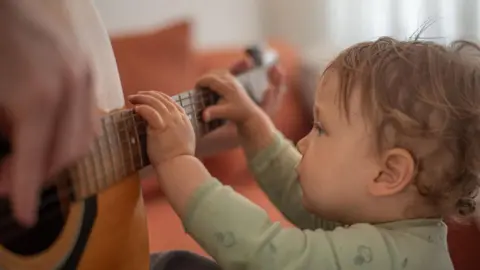
Subtle Influence
"A lot of the education at the start here is somewhat acquired indirectly," stated the CEO.
It's via this subtle influence that the family are hoping the child will pick up the British traits they aim to impart.
The consultant explained the tutor must be an individual who went to "prestigious academies – similar types of schools as the family plan to send their son to".
"The educator must be the suitable individual, they'll be performing things they may not realize they're doing, just naturally," he commented.
Expense Not a Factor
The family told Adam the successful candidate should ideally also have familiarity of or enthusiasm in horse riding, alpine skiing, artistic pursuits and music so as to influence the child in a broad spectrum of passions.
Furthermore though, he explained the family desired the tutor to register the child on a selection of classes so the child would be "equestrian training and starting an instrument by the time they are about three years old".
In the family's perspective, guiding their son develop into a "UK sophisticate" will bring about success and create opportunities.
"Taking into account the advantages and disadvantages of that, because it's undoubtedly a social class indicator," he notes.
Yet, in spite of all this guidance in "Britishness", would the child absorb what is termed cultural bias from the multicultural family he lives with in any case?
"Absolutely", replied the CEO. "The family realize this might not succeed, but they've simply adopted the perspective of, 'we should try and we should start as early as we can', because the expense of it is not a concern," he explained.
Impractical
A number of in the private teaching field who express these doubts.
Another CEO, chief executive of an educational organization, who provides individual instructors, stated that "the development of adopting dual cultures, or indeed, discovering oneself, is something that must be grown into, not manufactured."
He explained that he had moved from China to the UK at the period of seven, and had been brought up understanding and practicing two backgrounds. He continued to learn at a prestigious UK institution.
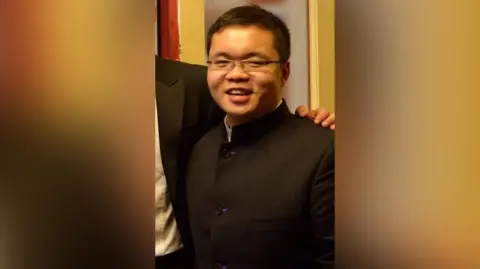
"The notion that a single person can serve as a representation of UK identity, someone who can possibly transplant the qualities of a UK sophisticate to a one-year-old child, appears optimistic and unfeasible," he wrote.
"Based on my background, engaging a distinctly British tutor from babyhood will does not instantly produce the outcome they hope for.
"I did not have such a tutor, and nevertheless I have been fortunate enough to enjoy many of the situations they aspire for their son."
He stated: "The reality is, personal identity can not be forced from the external environment; it must be embraced, and it must be internally driven."
Purchasing UK Culture
Of course, Britishness is something the expert hopes can be instructed – and marketed.
"I think the fact that the world views us in this regard is something that we should be cherishing|valuing|appreciating


